
The Ultimate Comprehensive FSc Physics Guide Pakistan: Mastering 1st and 2nd Year
Physics is the subject that best captures the difficulty of the transition from matriculation to FSc students. It is the study of everything in the universe, from the enormous, swirling galaxies to the subatomic particles that make up an atom.
This Comprehensive FSc Physics Guide Pakistan is your crucial road map to success if you are a pre-medical or pre-engineering student hoping to achieve high scores in your board exams and getting ready for entrance exams like MDCAT and ECAT.
Table of Contents
-
Defining Physics: Classical vs. Modern
-
1st Year Physics (Part I): The Classical Foundation
-
Mechanics, Vectors, and Fluid Dynamics
-
-
2nd Year Physics (Part II): The Invisible World
-
Electromagnetism and Nuclear Science
-
-
The Practical Side: Lab Work & Viva Voce
-
Pros of Studying Physics in Pakistan
-
Career Opportunities: Beyond Engineering
-
Exam Strategy: How to Score 85/85
-
Frequently Asked Questions (FAQs)
1. Defining Physics: Classical vs. Modern
The fundamental area of science that studies the nature and characteristics of matter and energy is called physics. The first step in mastering this Comprehensive FSc Physics Guide Pakistan is to differentiate between the two study eras.:
-
Classical Physics: Focuses on the macroscopic aspects of matter and energy. This covers thermodynamics (heat), optics (light), and mechanics (motion).
-
Example: Calculating the force required to move a car.
-
-
Modern Physics: Deals with subatomic particles and high speeds. This includes Quantum Mechanics and Relativity.
-
Example: Understanding how a laser or a semi-conductor works.
-
2. 1st Year Physics (Part I): The Classical Foundation
The 11th-grade textbook builds your mathematical logic. It focuses on the laws of motion that you can see and touch.
Vectors and Equilibrium (Chapter 2)
Force is a vector, not just a number. You need to become proficient in the Scalar/Vector Products and Rectangular Components of a Vector. The remainder of the book will be difficult for you if you are unable to calculate torque ($\tau = r \times F$).
Motion and Force: Projectile Motion (Chapter 3)
-
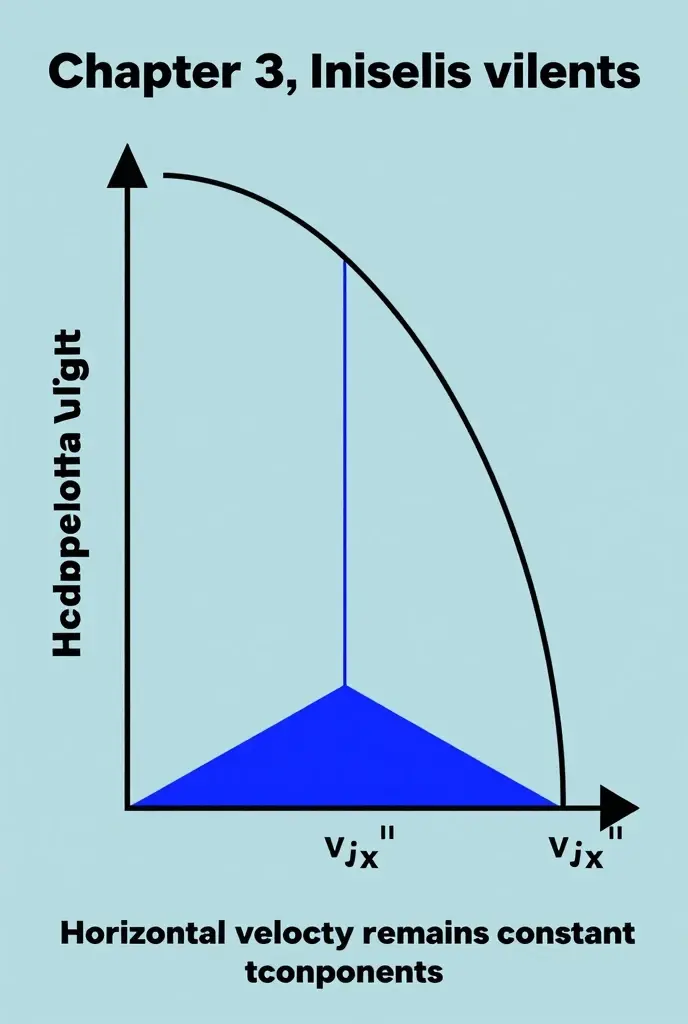
This is a favorite for long questions in all Pakistani boards. A projectile is an object thrown into space subjected only to gravity.
-
Key Concept: Horizontal motion ($v_x$) remains constant (ignoring air friction), while vertical motion ($v_y$) changes at a rate of $9.8 m/s^2$ due to gravity.
-
Fluid Dynamics (Chapter 6)
Bernoulli’s Equation is taught here. It clarifies why the top of an aeroplane wing experiences lower air pressure than the bottom, resulting in “lift.” This is an excellent illustration of fluid energy conservation.
3. 2nd Year Physics (Part II): The Invisible World
In the 12th grade, you move into the world of fields and particles. This is where most students find the syllabus challenging but rewarding.
Electromagnetism: AC Generators (Chapter 15)
-
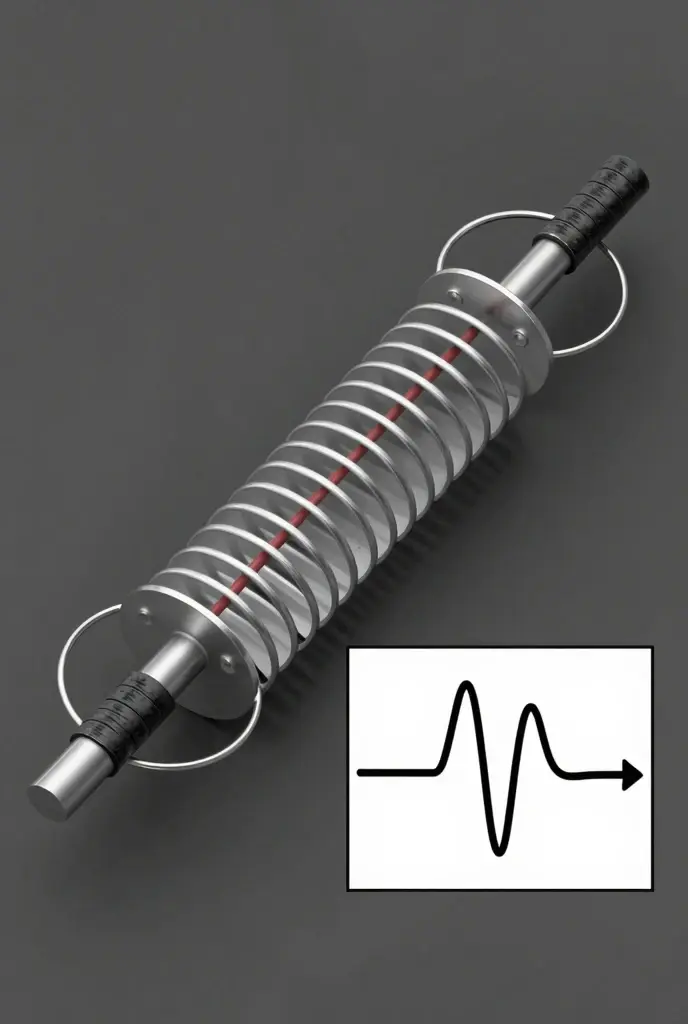
The core of the second-year curriculum is this. It describes how Faraday’s Law of Electromagnetic Induction transforms mechanical energy into electrical energy.
-
Key Components: You need to be able to draw and label the permanent magnets, slip rings, carbon brushes, and armature (coil). The formula for the induced EMF is $\epsilon = NAB\omega \sin(\omega t)$.
-
The Dawn of Modern Physics (Chapter 18)
This chapter talks about the Photoelectric Effect, which says that light acts like both a wave and a particle. It tells us why light of a certain frequency causes electrons to leave a metal surface, which is the basis for solar panels.
Nuclear Physics (Chapter 21)
You will explain what Nuclear Fission (breaking apart a heavy nucleus like Uranium) and Nuclear Fusion (putting together light nuclei like Hydrogen) are. This is the science that explains how the sun makes energy and how Pakistan’s nuclear power plants work.
4. The Practical Side: Lab Work & Viva Voce
.In the Pakistani board system, the practical exam carries 30 marks. It is often the difference between a Grade A and an A+.
- The Notebook: Keep your drawings neat. Use a lead pencil for diagrams and a pen for readings.
-
The Viva: The outside examiner will ask you about the “Least Count” of tools like the Screw Gauge or Vernier Calliper.
-
Standard Experiments: Finding the focal length of a lens or the resistance of a wire with a voltmeter and ammeter.
5. Pros of Studying Physics in Pakistan
-
Entry Test Dominance: A lot of the MDCAT and ECAT tests are about physics. Your high scores here often determine whether or not you get into college.
-
Technological Literacy: You learn how the power grid, the internet (Fibre Optics), and medical equipment (X-rays/MRI) work in real life.
-
Analytical Power: Physics teaches your brain how to use step-by-step logic to solve hard problems.
6. Career Opportunities: Beyond Engineering
As noted in this Comprehensive FSc Physics Guide Pakistan, your career isn’t limited to just civil or electrical engineering:
-
Medical Physics: Manage radiation and imaging technology in hospitals like Shaukat Khanum.
-
PAEC & KRL: Important jobs in Pakistan’s defence and atomic energy research.
-
Data Science: Analyzing complex big data for tech giants.
-
Meteorology: Predicting weather patterns and climate change effects in Pakistan.
7. Exam Strategy: How to Score 85/85
-
The “Diagram First” Rule: First, draw the picture for long questions. A clean, labelled diagram can get you 2 points before the examiner even looks at your writing.
-
Numerical Precision: Always include the “Given Data,” “Formula,” “Calculation,” and “Result with Unit.” Units, such as $kg, m/s, and J$, are required.
-
Past Paper Patterns: Most boards ask the same short questions that are in the textbook exercises. The best way to study is to work on 5-year-old past papers.
8. Frequently Asked Questions (FAQs)
Q: Which year is harder, 1st or 2nd?
A: The first year is harder in terms of ideas (Mechanics), while the second year has more derivations and requires more memorisation of Modern Physics ideas.
Q: Can I get full marks in Physics numericals?
A: Yes! Numericals are similar to math. You get 100% of the points for that section if the answer and the units are correct.
Q: Is Physics necessary for BS Computer Science?
A: Yes, most universities in Pakistan require FSc Physics for admission to CS or IT programs.
Conclusion
The universe speaks physics. This Comprehensive FSc Physics Guide Pakistan will give you the information you need to do well on your board exams and in your future job. Be consistent, practise your derivations every day, and make sure your diagrams are always neat.