
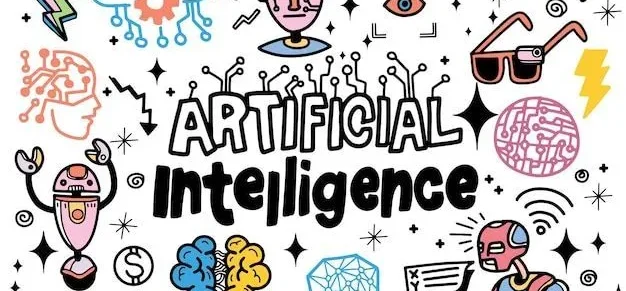

Artificial Intelligence: Transforming Lives Today and Tomorrow
Artificial intelligence is rapidly changing how we live, work, and interact with the world. from smart assistants to advanced healthcare solutions, AI is making everyday tasks easier and more efficient. Many universities offer a BS in artificial intelligence degree, in which ACE College Gujrat, affiliated with KFUEIT University, is the best option for you. As technology continues to evolve, AI is not only transforming our present but also shaping a smarter, more connected future
Table of Contents
- Opening
- A look at BS Artificial Intelligence
- Main Subjects and Job Opportunities
- Learning about AI
- The History and Growth of AI
- Different kinds of AI
- Main Parts of AI
- How AI systems work
- Key Technologies That Make AI Work
- AI in the Real World
- The advantages of artificial intelligence
- Problems and Limitations
- Moral and Social Effects
- AI and the Future of Work
- The Future of AI
- End
- Questions and Answers
Opening
Learn how Artificial Intelligence: Transforming Lives Today and Tomorrow. AI, or artificial intelligence, is one of the most important technologies of the 21st century. Things that used to only be in science fiction are now a big part of our lives. AI is quickly changing how we use technology and the world around us. For example, voice assistants, recommendation engines, self-driving cars, and smart healthcare systems are all examples of this. AI is important for automating tasks and solving problems worldwide. AI is revolutionising industries, enhancing their efficiency, and unlocking previously unimaginable ideas. But these new developments raise important questions about ethics, control, and the future role of people in an increasingly automated world. This blog goes into excellent detail about artificial intelligence, including AI history, types, technologies, uses, pros and cons, and what the future might hold for it.
A look at BS Artificial Intelligence
The Bachelor of Science in Artificial Intelligence (BS AI) is an undergraduate program that teaches students how to build smart systems. The program teaches students how to make machines do things that need human-like intelligence, like learning, reasoning, and solving problems. It does this by using ideas from computer science, math, and data science. Students learn both the theory and the real-world uses of AI, which gets them ready to come up with new ways to solve problems in fields like healthcare, finance, education, and self-driving cars.

Main Subjects and Job Opportunities
Machine learning, deep learning, natural language processing, robotics, data analytics, and programming with languages like Python are some of the topics covered in the BS Artificial Intelligence program. Students get to build AI models, look at data, and create algorithms with their own hands. Graduates can work as software developers, AI engineers, data scientists, or robotics experts. As more and more businesses look for AI-powered solutions, this degree opens the door to exciting and future-proof job opportunities.
Learning about Artificial Intelligence
Artificial intelligence is when machines are programmed to think, learn, and make decisions as people do. These systems are made to do things that usually need human brains, like reasoning, problem-solving, understanding language, and seeing. AI systems can look at a lot of data, identify patterns, and use that information to make decisions or predictions. Its systems can learn and adapt to improve their performance over time, which is different from regular software. AI lets machines do smart things, and in some cases, they can even do them better than people—like analyse data, recognise images, and make strategic decisions.
The Past and Present of Artificial Intelligence
Long before modern computers, the story of artificial intelligence began. Philosophers and scientists from long ago thought of machines that could think like people. But the official growth of AI didn’t start until the middle of the 20th century.
1. Beginnings (1950s–1960s)
When researchers started to see if machines could act like people, they laid the groundwork for AI. The first program could play simple games and solve math problems.
2. Challenges and Growth (1970s–1980s)
AI research grew, but it didn’t go very far because computers weren’t powerful enough. During this time, expert systems were created to copy the knowledge of experts in fields like medicine and engineering.
3. The Machine Learning Era (1990s–2000s)
Machine learning became the most popular method as computers got faster and more data became available. Systems could now learn from data instead of simply adhering to pre-established rules.
4. The Modern AI Boom (2010s to Now)
AI has gotten a lot better very quickly, thanks to improvements in big data, cloud computing, and deep learning. AI systems are now capable of understanding speech, translating languages, and creating text and pictures that resemble human creations.
Different kinds of Artificial Intelligence
You can put artificial intelligence into groups based on what it can do and how it works.
Based on Ability
- Narrow AI (Weak AI)
This is the most common kind of AI that people use today. It is made to do certain things, like recognise faces or browse the internet.
- General AI (also known as Strong AI)
General AI is the term for machines that can do any mental task that a person can do. We haven’t reached this level of intelligence yet.
- AI that is very smart
This is a theoretical type of AI that is smarter than people in every way. It is still a matter of debate and guesswork.
Based on how it works
- Machines that react
These systems don’t memorise and only react to what they get right now. - Systems with Limited Memory
These AI systems can learn from past actions and use that data to make decisions. - Theory of Mind AI
This advanced idea is that machines can understand how people feel and how they interact with each other. - AI that knows itself
A future idea in which machines have consciousness and self-awareness.
Basic Parts of Artificial Intelligence
AI systems need a few key parts to work well:
- Data: The building blocks of AI; good data is necessary for getting accurate results.
- Algorithms are mathematical models that look at data and find patterns.
- Computing Power: High-performance hardware lets you do complex calculations.
- Storage Systems: Needed to work with large sets of data.
- Feedback systems help them get better over time.
How AI systems work
Artificial intelligence systems work in a series of steps:
- Data Collection: Getting useful information from several sources
- Data Preparation: Getting data ready for analysis by cleaning it up and putting it in order
- Model Training: Putting data into algorithms so they can learn patterns
- Testing the system’s accuracy and performance is called evaluation.
- Deployment: Putting the model to use in real life
- Updating models with new data is an example of continuous learning.
AI systems learn in an iterative way, which means they get better and better as they get more data.
Important Technologies That Make AI Work
Several cutting-edge technologies are behind the growth of AI:
- ML, or Machine Learning
Machine learning enables systems to learn from data and enhance their performance without requiring programming.
- Deep Learning
A type of machine learning that uses neural networks with many layers to work with complicated data like speech and pictures.
- Natural Language Processing (NLP)
Let’s make machines understand, interpret, and make sense of human language.
- Seeing with a Computer
Let’s make machines look at and understand pictures and videos.
- Robotics
Combines AI with machines to do things in the real world.
- Learning by Reinforcement
A method of learning in which systems get better by getting rewards or punishments for their actions.
How AI is used in the real world
AI is changing a lot of different fields:
- Healthcare
AI helps doctors figure out what diseases people have, how likely they are to get better, and how to make new medicines.
- Learning
AI-powered tools make learning more personal and take care of administrative tasks.
- Money
These tools are used to detect fraud, trade using algorithms, and assess risk.
- Getting around
Artificial intelligence (AI) makes self-driving cars and smart traffic systems work.
- Shopping and online shopping
Recommendation engines suggest products based on what users like.
- Farming
AI helps improve crop production and keep an eye on the weather.
- Fun
Streaming services use AI to suggest content and enhance the user experience.
The Good Things About Artificial Intelligence
Artificial Intelligence offers numerous benefits across various fields:
- Automation: Makes things easier and more efficient by cutting down on manual work.
- Accuracy: Reduces mistakes made by people
- Speed: Can quickly process large amounts of data
- Availability: Works all day, every day, without getting tired
- Cost Savings: Lowers the costs of running the business over time
- Innovation: Makes it possible to create new products and solutions
- AI helps businesses make decisions based on data and get more done overall.
Problems and limits
AI has a lot of potential, but it also has a lot of problems:
- Dependence on Data
- AI systems need a lot of accurate data.
- Algorithms with Bias
- AI models can pick up biases from the data they were trained on, which can lead to unfair results.
- Not being able to explain
- Some of its systems are “black boxes”, which means that it’s hard to understand how they make decisions.
- Costs of Development Are High
- It can be costly to build and keep its systems running.
- Risks to safety
- Cyberattacks and manipulation may be able to get into AI systems.
Effects on morals and society
The growth of Artificial Intelligence brings up important moral questions:
- Privacy
AI systems frequently utilise personal data, prompting questions about the level of data protection.
- Responsibility
It can be challenging to figure out who is responsible for AI decisions.
- Being fair
It is essential to make sure that its systems don’t treat some groups unfairly.
- People in Charge
To stop people from misusing its systems, it’s important to keep control over them. We need ethical frameworks and rules to ensure responsible development.
The Future of Work and Artificial Intelligence
Artificial Intelligence is having a big effect on the job market. Automation may take over some jobs, but it also opens up new ones.
- Job Loss
Automating the same jobs every day is the most likely outcome.
- Making Jobs
There are new jobs in AI development, data analysis, and system management.
- Changing Skills
To keep up with the times, workers need to learn new skills like programming, data analysis, and critical thinking. Humans and AI systems will probably have to work together in the future.
What Will Happen to Artificial Intelligence in the Future
Many exciting things could happen with Artificial Intelligence in the future:
- Advanced healthcare solutions that can find diseases early
- Transportation systems that work completely on their own
- Smart cities with infrastructure powered by AI
- Better working together between people and AI
- Big steps forward in scientific research
It is important, though, to ensure that AI development is in line with human values and the needs of society. Responsible innovation will be very important for making the future a good one.
The End
Artificial Intelligence is changing the world in ways that have never been seen before. It could make people’s lives better, help economies grow, and help solve tough problems around the world. However, it also poses risks that require careful handling. To achieve the most out of AI, you need to find a balance between being responsible and being creative. Society can get the most out of AI while minimising its risks by dealing with ethical issues, making sure things are clear, and encouraging diversity. As time goes on, it will keep changing and shaping the future of humanity in ways we are just starting to understand.
FAQs
-
What is AI?
Artificial Intelligence is when machines can learn, think, and make decisions as people do.
-
What are the most common kinds of AI?
Narrow AI, General AI, and Superintelligent AI are the three main types.
-
How do people use Artificial Intelligence every day?
Smartphones, virtual assistants, recommendation systems, and online services all use AI.
-
What are the good things about AI?
AI makes things work better, more accurately, and faster, and lets new ideas come to life in many fields.
-
What are the dangers of AI?
Job loss, bias, security threats, and ethical issues are all risks.
-
Will AI take over jobs that people do?
AI will take over some jobs, but it will also make new jobs and opportunities.
-
What will AI be like in the future?
There will be smarter systems, more automation, and more integration into everyday life in the future.
💷 + 36,824.44 Dollars > graph.org/Coinbase-04-13?hs=0aa58b4d2cc3a7476d85d33941dbd2c2& 💷
d4drok