

Science doesn’t just happen in fancy labs with expensive glass beakers; it happens in your kitchen every day. Doing simple chemistry experiments at home is an excellent way to see how nature works. These activities let you learn through doing, whether you’re a student looking for a project or just someone who wants to see a “magic” trick that is based in reality.
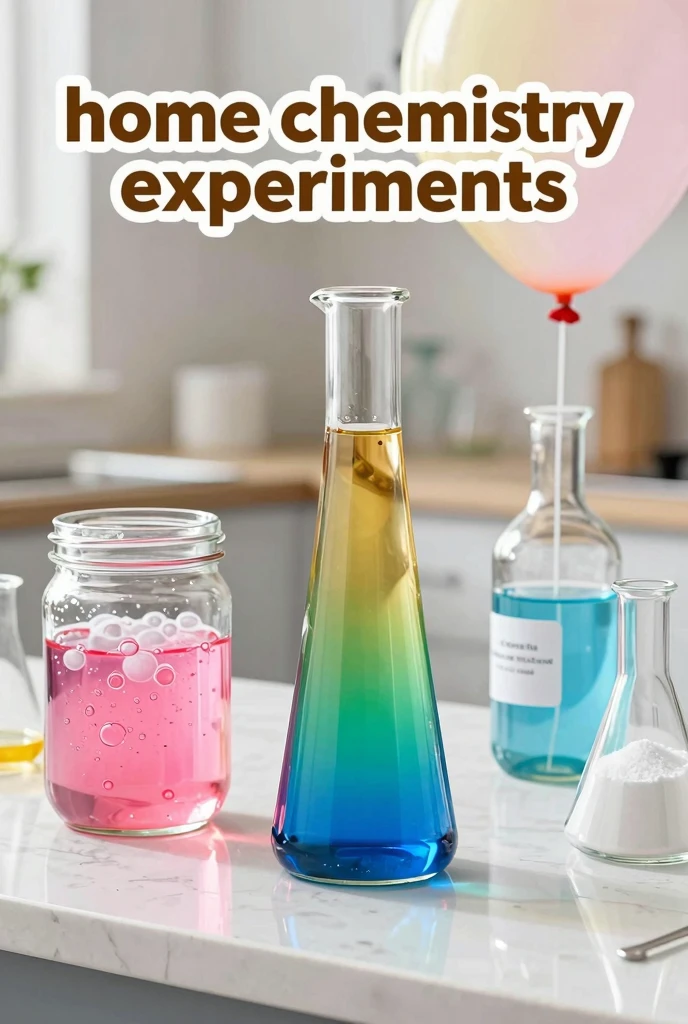
Why You Should Do Simple Chemistry Experiments at Home
Chemistry is beautiful because you can see it. You don’t just read about molecules when you do simple chemistry experiments at home; you see them crash into each other, bond, and change. These tests help us connect what we read in books with what we can see and touch in the real world.
1. The Colorful Elephant Toothpaste Reaction
One of the most visually satisfying easy chemistry experiments for home is the “Elephant Toothpaste” demonstration. This experiment shows how a catalyst can rapidly speed up a chemical reaction, creating a massive foam fountain.
What You Will Need:
- A plastic bottle
- Dry yeast (the catalyst)
- Warm water
- Dish soap
- 6% Hydrogen peroxide ($H_2O_2$)
- Food coloring
The Chemical Process:
Hydrogen peroxide breaks down into water (H2O) and oxygen (O2) on its own, but it usually takes a long time. When you add yeast, the enzyme catalase acts as a catalyst and takes away the oxygen right away. The dish soap traps the oxygen that is escaping, which makes the thick, toothpaste-like foam.
2. The PH Indicator: Red Cabbage Magic
Understanding acids and bases is a core part of science, and you can create your own indicator with easy chemistry experiments for home.
Creating the Indicator: To make the indicator, cook red cabbage in water. Keep boiling until the water turns a deep purple color.
Anthocyanin is a pigment that changes color when the liquid is acidic.
Testing Your Samples:
Lemon juice makes the liquid bright red (acidic).
Baking soda makes the liquid blue or green (basic).
- Water: Stays purple (Neutral).
3. The Self-Inflating Balloon Experiment
If you want to see gas expansion in action, this is one of the most reliable easy chemistry experiments for home. It uses a simple acid-base reaction to do work—in this case, inflating a balloon.
The Setup:
- Fill a small bottle with vinegar.
- Use a funnel to put two tablespoons of baking soda inside a balloon.
- Stretch the neck of the balloon over the bottle, then tip the baking soda in.
The Science: The reaction between the acetic acid in the vinegar and the sodium bicarbonate creates carbon dioxide gas (CO2). Because the gas needs more space than the solids and liquids, it moves upward and fills the balloon.
4. Creating a Density To Liquidswer with Household
Chemistry isn’t just about reactions; it’s also about the physical properties of matter. This is one of the easy chemistry experiments for home that focuses on “Density,” or how much mass is packed into a specific volume.
Layering the Liquids: Slowly pour the following into a tall glass in this order:
- Honey (Most dense)
- Dish soap
- Water (Add food coloring for effect)
- Vegetable oil (Least dense)
The Observation: Despite being all liquids, they will not mix. The heavier molecules of the honey sink to the bottom, while the lighter, spread-out molecules of the oil float on top.
Maintaining Safety During Home Science
Even though these are easy chemistry experiments for home, you must always follow basic safety protocols.
- Eye Protection: Use safety glasses if you are working with peroxide or vinegar.
- Skin Care: Wash your hands immediately after handling any household chemicals.
- Cleanup: Never pour large amounts of oil down the sink; wipe it up with a paper towel instead.
Conclusion
Doing simple chemistry experiments at home makes your home a place where you can learn new things. These experiments show that science is open to everyone, from the explosive growth of gases to the small changes in pH colors. Try one today and see what you can find out!